
Comparison guide
Capoeira vs Kickboxing
Both torch calories. Only one teaches you music, mobility, and a 400-year-old Brazilian game. Here's the honest comparison before you sign anything.
4 min read
TL;DR
Kickboxing is faster to pick up and built around contact and pad work. Capoeira is non-contact for beginners, builds far more hip and spine mobility, and adds live music and community you can't get from a bag. If you want striking power, pick kickboxing. If you want to move better, have more fun, and still get a brutal workout, pick Capoeira — you can test it with a beginner-friendly first class before committing.
Workout and conditioning
A kickboxing hour is interval work: rounds on the bag or pads, then core. A Capoeira hour is continuous — ginga drills, kicks, escapes, floor movement, then the roda. Kickboxing builds punching and kicking power. Capoeira builds mobility, balance, shoulder and core strength, and a cardio base most people don't expect on day one. Students routinely say their hips and lower back feel better after a month of training.
Contact and injury risk
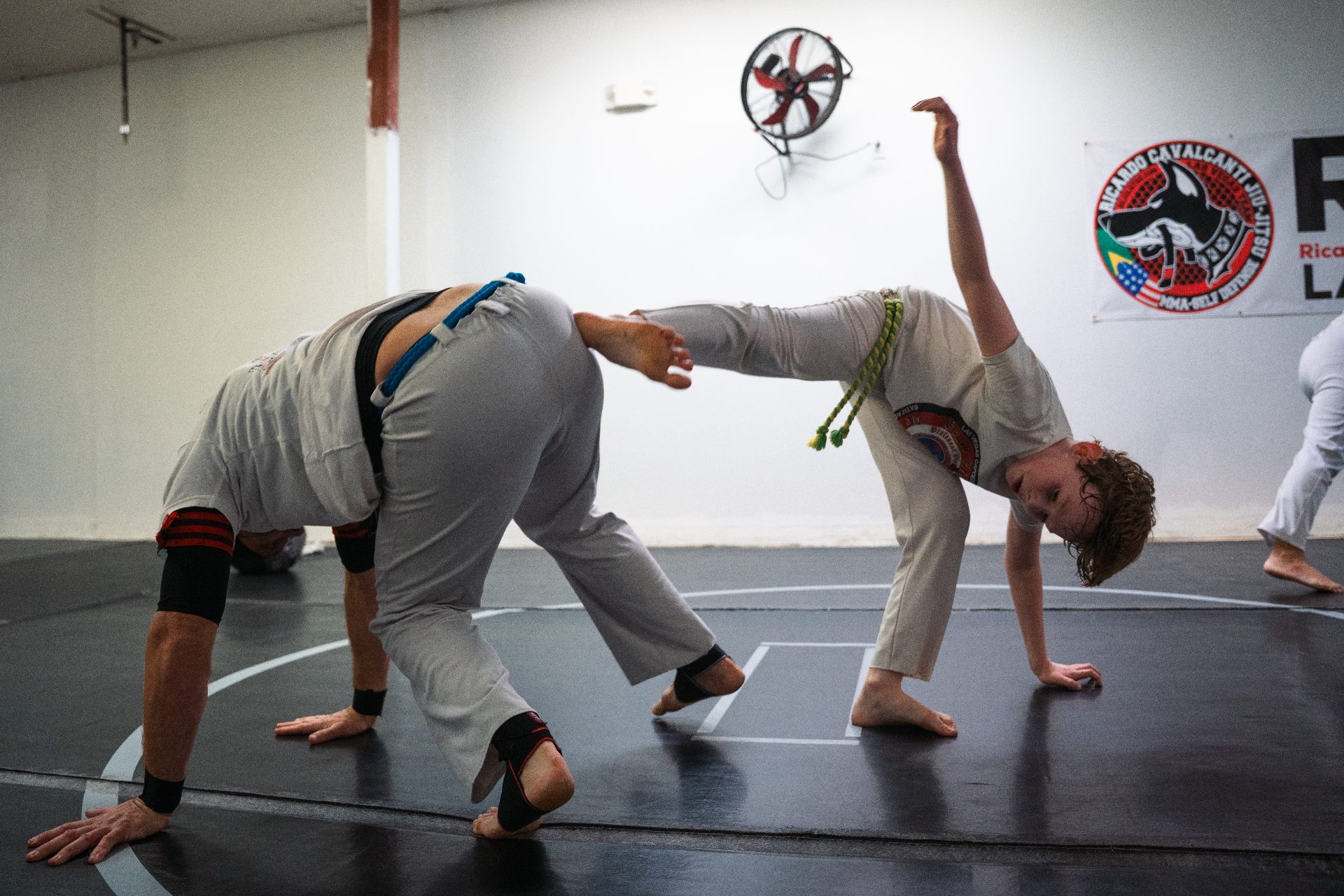
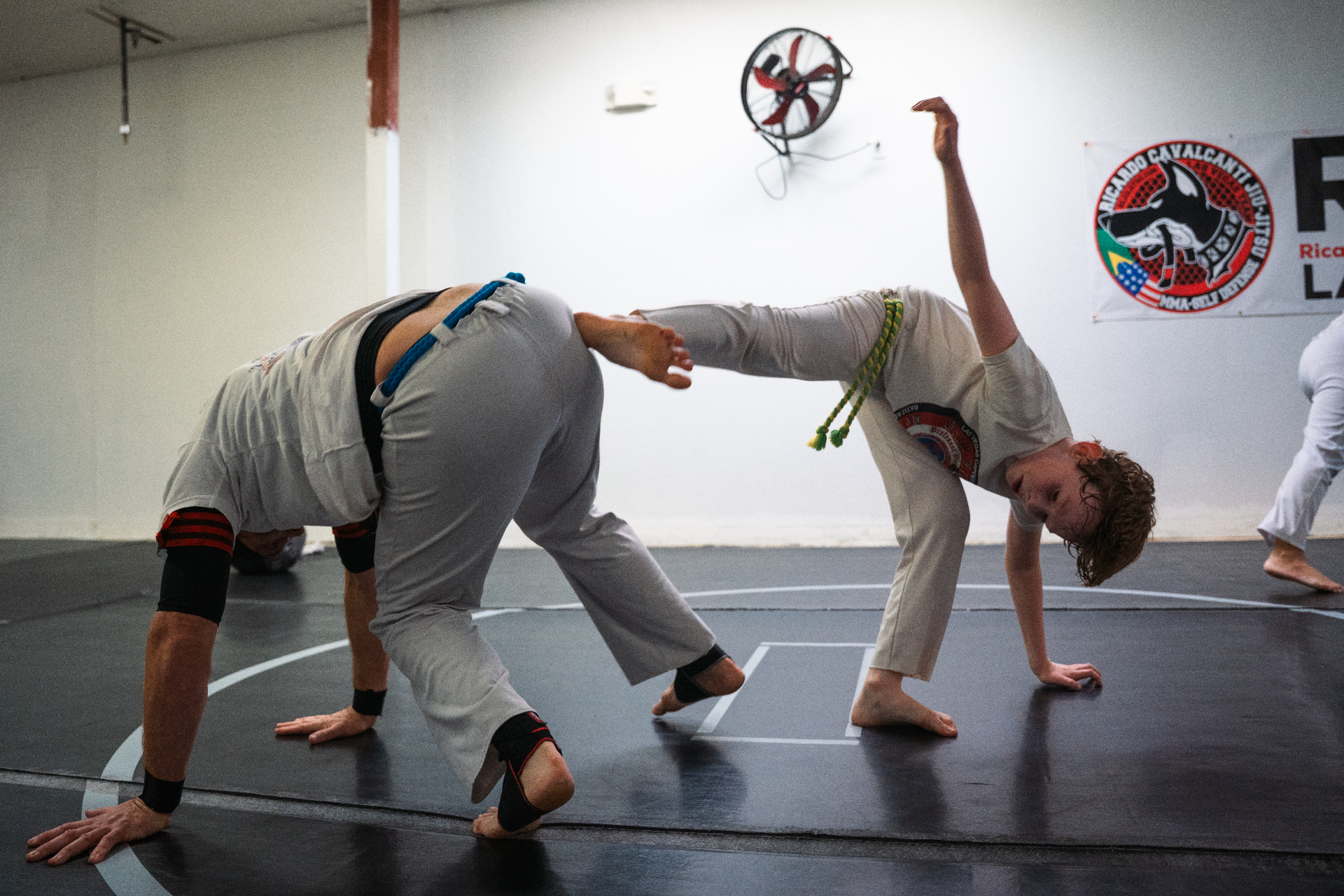
This is the biggest practical difference. Kickboxing gyms progress toward sparring, which means head contact, shin bruises, and the occasional black eye. Capoeira is a game of near-misses: kicks are thrown so your partner can escape them. Beginners play at a slow tempo, and nobody is trying to knock you out. For adults with jobs, kids, or no interest in taking punches, that matters.
Learning curve
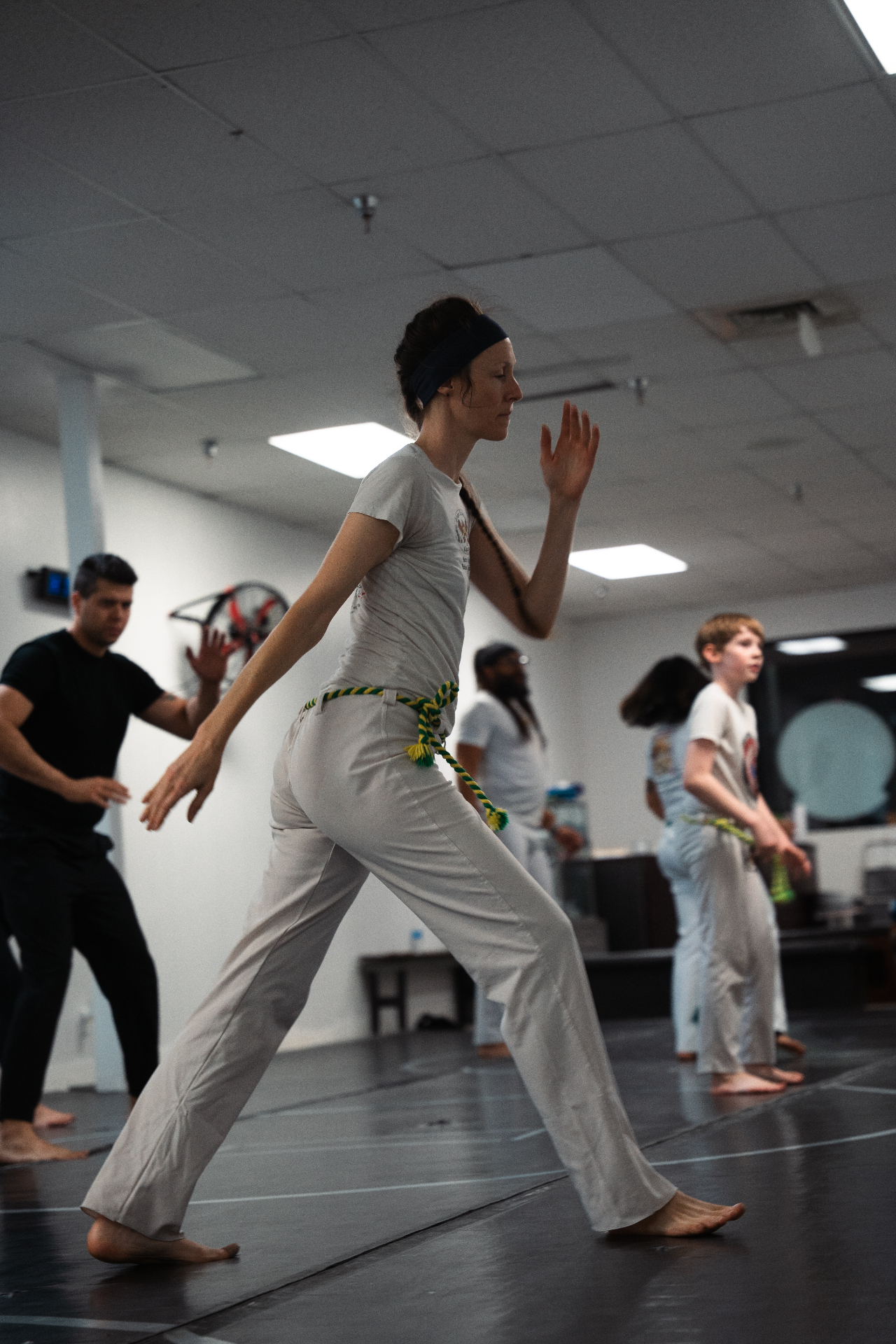
Kickboxing feels good in week one — a jab is a jab. Capoeira takes two or three classes to stop thinking about your feet. Once the ginga clicks, progress is fast because every kick, escape, and movement launches from that same base step. Read what to expect at your first class if you want the minute-by-minute version.
Culture, music, and community
Kickboxing is a sport. Capoeira is a sport plus a culture: songs in Portuguese, the berimbau setting tempo, batizado ceremonies, and a lineage that traces back to Brazil. In a kickboxing class you work next to people. In a roda you play with them. That's why our students stay for years instead of months.
Cost in Las Vegas
Valley kickboxing memberships typically run $120–$180 per month, often on a 12-month contract with a gear purchase on top. At Las Vegas Capoeira Academy you can start with a beginner-friendly intro — no uniform required to try and no contract to test the water. Fill out our Get Started form and we'll walk you through the details.
Who should pick which
- Pick kickboxing if your goal is striking power, competition, or the simplest possible workout format.
- Pick Capoeira if you want mobility, acrobatics, music, a non-contact start, and a community your whole family can join.
- Do both if you have the time — they cover each other's blind spots.
Related Classes
Where to Go Next
FAQ
Common Questions
Is Capoeira or kickboxing better for weight loss?+
Both burn serious calories. Kickboxing front-loads pad work and repetition; Capoeira mixes cardio with mobility, core, and acrobatic strength. If you get bored on a heavy bag, Capoeira keeps you moving for a full hour without noticing.
Does Capoeira involve getting hit like kickboxing?+
No. Capoeira is played, not fought — kicks are thrown to be evaded, and beginner rodas run at a slow tempo. There is no sparring with contact in a beginner Capoeira class.
Which is easier to learn as a total beginner?+
Kickboxing is faster to feel competent in — punches and kicks on a bag are simple. Capoeira takes two to three weeks to feel the rhythm, then progresses quickly because the ginga carries every movement.
Can I train Capoeira and kickboxing at the same time?+
Yes. They complement each other well: kickboxing sharpens power and timing, Capoeira builds hip mobility, balance, and evasion. Many of our adult students cross-train.
Start Here
Try Capoeira Before You Commit
Book your Capoeira trial in Las Vegas — beginners welcome, no contract and no contact required.